Nancy Pelosi: ‘I’m in awe’ of the maker movement | VentureBeat | Gadgets | by Christina Farr.
I love it when politicians find out something new for the first time.

Nancy Pelosi: ‘I’m in awe’ of the maker movement | VentureBeat | Gadgets | by Christina Farr.
I love it when politicians find out something new for the first time.
Welcome to the Era of the Hardware Startup | LinkedIn.
What I love about hardware startups is their willingness to take on and transform dauntingly complicated industries. Until recently, manufacturing had been almost exclusively the domain of big companies that can afford to build at scale. Now, these makers are turning the tables and showing the value of being both adaptable and close to your customers.
I agree. From talking with many hardware startups the momentum is definitely there. I often talk about this as we are now where we were in the 80’s 90’s when software development and computing was transforming from being obtainable only by big companies with deep pockets to everyone who has a PC can now code to create a program that is of value.
Hardware is very different than software. You can not develop a hardware product in a few days to a week. It takes time, patience, and more capital. It requires more relationships that last for a longer period of time.
There are still many hurdles to over come such as:
There are a lot more questions to be asked and answered in this journey. I can’t cover them all here. In the future, I will write more about the process of hardware development. I am going to tell stories from the trenches. What happened, what didn’t, how we solved the issues and how to approach these things in the future so it does not happen to you.
We have been seeing some great things from our clients. For most of them this is their first business. It is great to see them fill out their first Purchase Order ever. It is a great moment for them and for us.
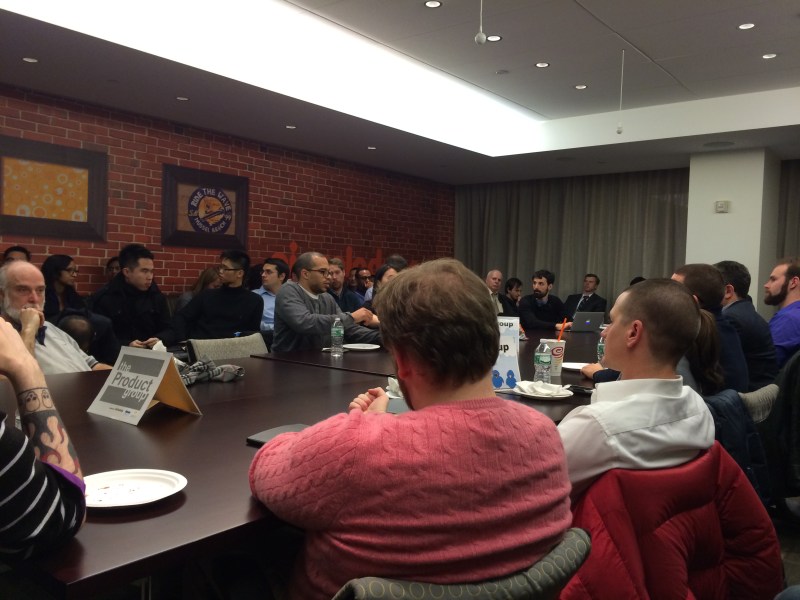
Last night I attended the March 2014 The Product Group Meetup run by Jeremy Horn. It was a packed house. They need another space to host this event. The theme of this month’s meetup was “Do you like your product person?”. There was the presentation of The Best Product Person of 2013 and then a lively discussion of the Featured Product, VenueBook.
The format of the event is organized well. Jeremy compares it to being home for Thanksgiving dinner. I can attest to that fact. Everyone just jumps in and the conversation goes around the room. Sometimes Jeremy pushes the discussion along so more people can participate. The discussions are always very active, informative and fun.
The format of the event is as follows:
First is the question of the evening. Everyone gets to introduce ourselves and say a simple answer to the question. This time it was “Do you like your product person?”, yes or no. My answer was a resounding yes!
The next part of the evening was announcing The Best Product Person of 2013. The winner was Adrian Jank. Congrats Adrian for winning this year.
The final part of the night was the discussion of the VenueBook product. VenueBook is an online SaaS System that venues and party planners use to effectively plan events and make reservations for the spaces. There is definitely more to it because VenueBook replaces the accounting systems and payment systems for the venues and planners. It is a great idea that time has come. From the looks of it, it makes planning an event very easy. Their database of venues is huge and of great quality. I have attended events at a lot of the venues listed. The discussion ranged from how they got into this business, what makes them unique in the market to issues they would like the group to help them with. I will not get into details as I don’t want to reveal anything that could be released at a later time. Much to say is that they have some great people working with them on their team. I wish them the best of luck with their business.

My how much the community has grown. The NY Hardware Meetup is at it’s 15th meetup. The MakeIt NYC is at it’s 16th meetup. All the meetups have been chock full of interesting stories coming from the trenches of the hardware scene in NYC. This one is no different except that the attendance was through the roof (see image above of standing room only crowd). By the way the back of the head in the foreground is Jonathan Hirschman organizer of the MakeIt NYC Meetup. If you wanted to know.
This event was a joint event between the NY Hardware Meetup and MakeIt NYC Meetup. Four entrepreneurs presented. After the announcements, next year predictions and sponsor pitches the audience was treated to some great startup stories.
Patrick Raymond presented his Curvit product and the two-year journey from it’s conception to national retail. Curvit solves one of life’s annoyances – it stops “shower cling”, and gives you more space for your daily spritz at the same time. Patrick is the founder of the Inventors Association of Manhattan, and he has hosted of Food Network’s Invention Hunters. It was great to see his progress and he started a Indiegogo campaign.
Coming off of their successful Dragon Innovation crowdfunding effort, Hammerhead Piet Morgan, Laurence Wattrus, and Raveen Beemsingh told the story of how they started. I wish I had a picture of the slide they showed of the iterations of their product. They started out in a apartment in New Jersey. LIving together, sharing space and creating a great product. It was great to hear about their problems they faced and the direction they want to take the company. Motorcycle support is next! They are in the R/GA Connect Devices Accelerator.
Next up was Kurt Workman‘s and Jacob Colvin‘s story about their Owlet product. The product takes baby monitoring to a whole new level. The Owlet Vital Monitor collects heart rate, oxygen and sleep data, and helps keep parents aware of possible indicators of danger. It was great to hear their story. As parents or would be parents themselves they were their own first customer. Their presentation was great and very warm feeling. Showing baby faces on the screen made people say awe. They fielded questions expertly such as “What about the RF signal? Would cause the baby hard”. Their answer was two fold. They said that doctors say the risks out way the value you get from the information and how Bluetooth LE has at least 10 times less power then cellular RF. Their knowledge showed through. Way to go guys. They are also in the R/GA Connect Devices Accelerator.
Next and not least was Ben Melinger. He tells us two stories. The first one was about Smash Cup, a cool green, clean collapsible travel tumbler. I could use this product. I would make coffee at home and then take it with me. Clean it, collapse the cup and through it in my bag. Done. My bag is small so it would fit nicely collapsed. The other product story we heard was bout Fyll, a fashion-forward, tough glass water bottle that keeps water from being flavor enhanced (in a negative way) by plastic or metal flavors. Ben talked about his journey from beginner to pro. He gave the MakeSimply X Education program a shout out. Thx Ben. His story continued by discussing the hurdles he had to over come to get his products to the state they are today. One such hurdle was having to learn SolidWorks. For those that don’t know SolidWorks is a very popular CAD tool that is used to render complex solid 3D drawings and helps you move toward an engineering drawing. The type of drawing that factories want to see. He discussed the huge cost of entry it is to buy this product. He wishes there was a cheaper solution out there that is just as popular. Thanks Ben for your great insights.
All in all it was a great event. We have defiantly outgrown that space. I can’t wait for the next meetup.
Disclaimer MakeSimply, a company I am co-founder of is co-sponsor of this event.
Past and present winners. The Soloshot product is cool. I like that it has a great design, looks high end and is new tech functional. It uses robotic like technology to solve a reporter style problem.








Technology and jobs: Coming to an office near you | The Economist.
INNOVATION, the elixir of progress, has always cost people their jobs. In the Industrial Revolution artisan weavers were swept aside by the mechanical loom. Over the past 30 years the digital revolution has displaced many of the mid-skill jobs that underpinned 20th-century middle-class life. Typists, ticket agents, bank tellers and many production-line jobs have been dispensed with, just as the weavers were.
The Economist agrees with my last post
Two weekends ago I spotted an op-ed piece by Thomas L. Friedman. In this piece he reviews a book by Erik Brynjolfsson and Andrew McAfee’s called, “The Second Machine Age”. This book is their sequel to their very popular book called, “Race Against The Machine“. The main idea of their books are that technological advancement is happening faster that ever before and there are ramifications to the fast pace or technological progress. There is some good and some bad side effects ( I am down playing it here a bit. Your will see why in a few). This relates to how we manufacture products in developed countries and what it really means when we say “Made” vs. “Assembled”.
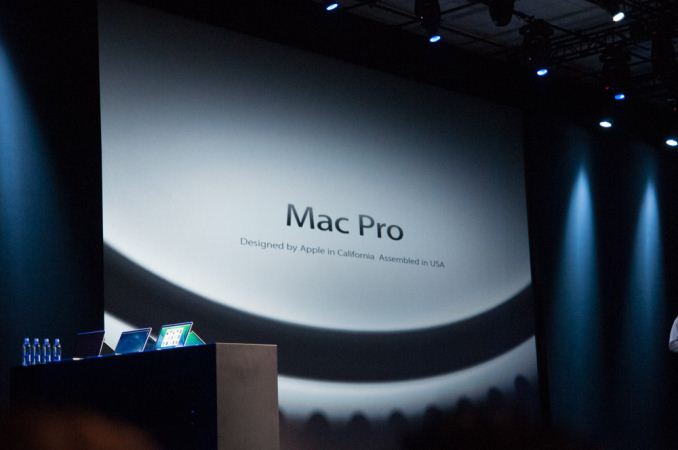
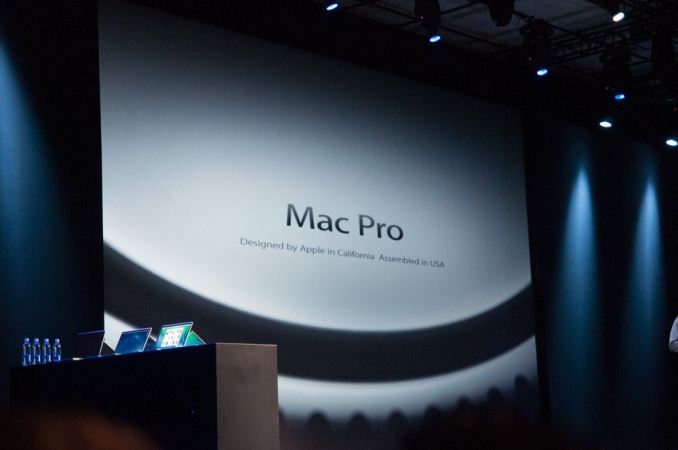
When is a product assembled and not made? If you are a tech person you are aware of the new Mac Pro that Apple release on Thursday, December 19 2013. Sorry Apple for using you as an example (I own a Macbook Air, an iPhone and an iPad mini). There were several articles such as this one by Time that characterized the building of the product in the USA. This is not true. The Mac Pro is assembled in the USA. You might ask what is the difference? There is a huge difference. Just because the factory is located in the Arizona, USA does not mean the entire product is made in the USA. Also it does not mean there will be a ton of new jobs created. On the contrary it is the exact opposite. Few jobs are created.
“Made” implies that the product and components are built in that location. Everything. There are also other implications that people assume with “Made”. Such as, there are people in the factory on an assembly line and people at stations building components. That was true and in some situations is still true, but less and less people are making things today. Robots not humans are making things more and more. People tend to think that since there is a factory then there must be people in it making and building.
“Assembled” means that the components are made some place else and brought to the factory to be assembled into a finished good. This requires even less people at the factory. Even less in the future. Machines do the assembly. Again not many people needed in this process.
“Apple is bringing manufacturing back to the USA and leading the charge for manufacturing in the USA. Bringing back jobs”…Not
People were over joyed that “Apple is bringing manufacturing back to the USA and leading the charge for manufacturing in the USA. Bringing back jobs”, but that is the furthest from the truth. As an American I was happy too, but having a new factory built does not mean there will be jobs. That is what is elegantly discuss in the Thomas L. Friedman piece and the two books I mention. In the not to distant future 5-10 years as we get closer to autonomous robots the numbers of people in the factories will get closer to zero. The good thing about that is the factory location can now be located closer to the consumers and the factories could handle customizations at a low price. This is a boon for the manufacturers too, logistics (getting the product to the consumer) become easier and labor costs are reduced to near zero. The not so good thing is that this will not increase employment, but reduce it.
As machines get smarter (faster and cheaper) they will replace people in many jobs. As a society we need to decide where and how far this should go. There needs to be a way to balance this out. As a technologist I am excited about the potential. As a member of society I am concerned. Should I be?
Top image is from anandtech.com Thank you.

Happy New Year everyone. There is nothing like a new year without predictions and statements about what is to come (or not) in your industry for the new year. So to start this year off right I have selected three articles to comment on for the new years blog post. I saw these articles during the holiday break. The first article is by Anthony Wing Kosner from Forbes online. I have come to read Forbes every now and then, but have become disturbed by their ads that interrupt and show up all the time. I digress. I agree with him that Hardware is the new Software. From the discussions I have had with people in the Hardware Community in NYC we all agree on this. When I talk with people about this I usually say that where we are now, with Hardware, we once was with Software in the 90’s. I feel it is like a blast from the past. During that time in our past, big companies were the only ones that could afford to make their own software. They had the funds to buy the servers and the software packages. Now look what has happened, startups can use development packages for free (open source) and they don’t need to buy servers they can rent time and use cloud services. Something similar is happening with Hardware Prototyping. Now you can use cheap development boards to prototype with. However, there is no foundation yet for the development of hardware products yet. Big companies have been doing this for awhile and so they have developed their strategies, but big company strategies do not translate to small company strategies.
We have project management techniques and Product Managers for software products, but not for hardware. Not yet. I see it happening and evolving in that direction. Hardware is very different than software (I have mentioned this and explained it in my other posts.) it needs a different kind of management and strategy. We are developing something along those lines at MakeSimply. That then leads me to the next article also from Forbes online by Rakesh Sharma. This article is a great start to the discussion of what makes a successful hardware business. It requires rethinking things and adapting new ways. I also believe there are always was to streamline the process. Make the process open to the customer and easier to implement. The last article is a post to Google+ from Robert Scoble. I mention it here as Google Glass is a new type of wearable hardware product. I am relieved to see that one of the biggest fans of the product has seemingly come to his senses and realizes that the product is not ready yet. I say exactly, that it is too early. It needs more time to cook. The ideas and use cases are solid, but the technology behind it is not ready. The battery does not last long enough, the processing power in the small package is not good enough and the OS is not easy to use. Not to mention the social implications of wearing such a device in public. This reminds me when Microsoft brought out the TabletPC. You can see the use cases, but the technology was not there yet. Also people were not shown the proper use cases that would make them buy the device. I also remember the head stares I would get when I showed up with my HP TC1100 TabletPC. Wow it was a wonderful device, the batter lasted for two hours or less, and it took forever for word to startup, but I loved the saucer separating machine (Star Trek Next Generation reference, look up HP TC1100 to further understand the reference). It took almost six years after Microsoft came out with the TabletPC and until Apple came out with the iPad that technology and the market were in sync with each other. If Google Glass would come onto the market today it would be relegated to niche industries and will not be ready to be a consumer device. 2014 already looks like it will be a great year for Hardware Startups!
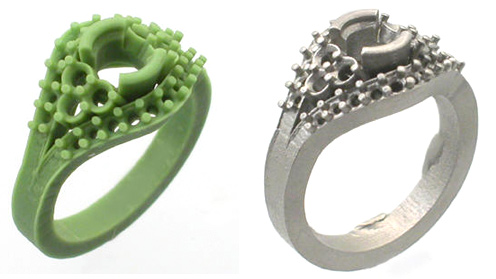
This article and video got me thinking of how 3D printing can, will and has changed the jewelry business. The flexibility that the computer aided design software gives is just incredible. Some hard to make intricate designs can now be easier to make. I took a look at the Solidscape T76 3D wax printer that is used in casting parts. The printed wax is used to make a cast. Turns out this is an elaborate five stage process, including the pouring of the molten metal into the cast, cooling and then polishing. The other way of printing jewelry is to use a printer that prints in metal. This process uses glue and a powder form of the metal. The glue and metal are printed in layers and then it is heated, then polished. This video that shows how GE is using 3D Metal printing to print newly designed parts for the aerospace industry. Imagine what you could design when prices come down on these printers.

On Monday December 9th Allen and I attended the 14th NY Hardware Startup Meetup at NYC Alley. Disclaimer: MakeSimply is a sponsor of the NY Hardware Startup Meetup. It was a well attended event. There was not an empty seat in the house, It was standing room only. One of the presentations that stood out, for me, was one given by Ryan Vinyard from Lime Lab/Highway1. His presentation reminded me of an article I read awhile ago that described a first time hardware entrepreneur that had a packaging fail. It also reminded me of a presentation Allen and I gave at MakeIT NYC.
“Stacking one pallet on top of another crushed them”
He had a great Kickstarter. He met his goal and then some. The entrepreneur did not take into account the logistics, package labeling and kit packaging. These things are often forgotten. It is sad actually. You designed a great product. You worked very hard to find a factory. You shopped around the BOM. The product is coming off the assembly line. It passes quality control. You designed the packaging, but you left out the design of the kit packaging. This is where experts with import/export experience come in handy. They know what labels to use to place on the boxes so they are stacked properly. They know what packaging works best depending on method of transport of the product from point A to point B. They there is the amount of product per package that has to be calculated. Calculations are done on how many product will fit in the carton, how much will fit on a pallet and then how much will be in a container. Then there are these costs to consider:
After you have calculated all of this, then you know how much your product costs to build and get to your customer. I would not recommend including shipping unless you have a deal with a shipper or fulfillment. If you don’t have an agreement you will be paying a lot more money for the shipping, taxes and tariffs if you are shipping internationally. Until next time.
 The Tech Chronicles